Client
Lightful
Role
Head of Design
Direct Reports
4
Building and managing a scale-up design team
At Lightful I led on scaling the team and design systems, ensuring every UX initiative moved the needle on core business metrics.
At Lightful I led on scaling the team and design systems, ensuring every UX initiative moved the needle on core business metrics.
At Lightful I led on scaling the team and design systems, ensuring every UX initiative moved the needle on core business metrics.
Visit Site
▷ Overview
Led and grew the design team to 5 over 6 years
Set up team workflows and cross-functional team dynamics
Facilitated and prioritised the vision for our product, aligning the company, including the C-Suite around it
Created design systems and mentored my team
▷ Overview
Led and grew the design team to 5 over 6 years
Set up team workflows and cross-functional team dynamics
Facilitated and prioritised the vision for our product, aligning the company, including the C-Suite around it
Created design systems and mentored my team
▷ Outcome
Reduced Design-to-Dev Handoff by more than 2 days per sprint via Ray Libraries and clear documentation.
Mentored 3 mid-weight designers into Senior roles within 2 years through
Reduced decision time for features by more than 50% 'pivots' by introducing a Discovery Phase and a cross-functional RICE prioritisation framework.
▷ Outcome
Reduced Design-to-Dev Handoff by more than 2 days per sprint via Ray Libraries and clear documentation.
Mentored 3 mid-weight designers into Senior roles within 2 years through
Reduced decision time for features by more than 50% 'pivots' by introducing a Discovery Phase and a cross-functional RICE prioritisation framework.

▷ The Challenges
Lightful’s mission was to empower non-profits, but our platform was becoming a "feature factory." My primary objective was to move the organisation away from ship-speed toward impact-quality. There was misalignment on goals - the C-Suite wanted "more features" to close deals; Product wanted "stability." User research was often done ad-hoc, mostly just to validate already decided decisions. Handoff with devs was poor, with implementation often incorrect due to poor communication and misaligned documentation.
How could I build a high-velocity, scalable design function and team that prioritised product quality and user impact over feature output?
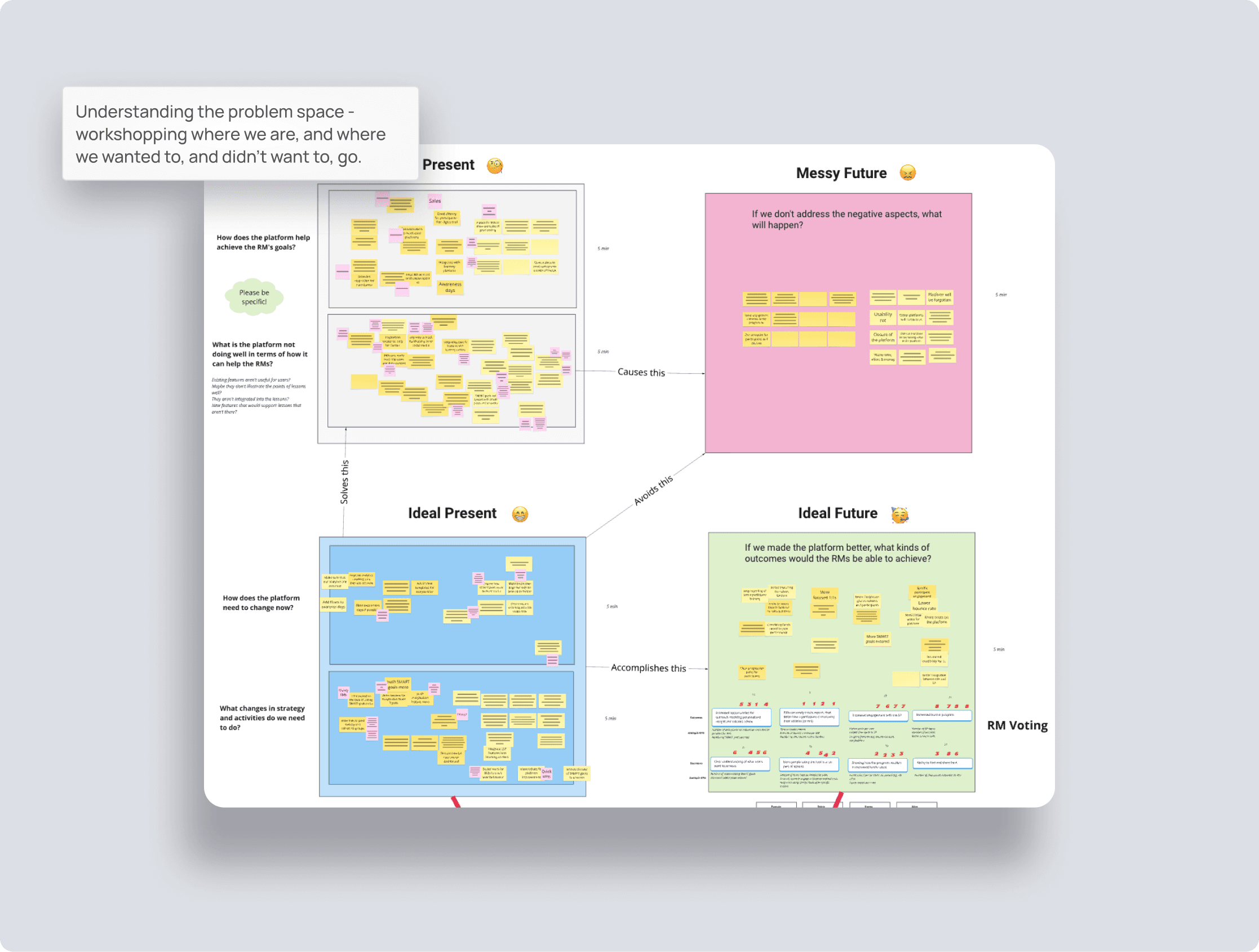
I began by trying to understand our problem space - mapping out where we were, where we wanted to be, and where we did and didn't want to go.
▷ The Challenges
Lightful’s mission was to empower non-profits, but our platform was becoming a "feature factory." My primary objective was to move the organisation away from ship-speed toward impact-quality. There was misalignment on goals - the C-Suite wanted "more features" to close deals; Product wanted "stability." User research was often done ad-hoc, mostly just to validate already decided decisions. Handoff with devs was poor, with implementation often incorrect due to poor communication and misaligned documentation.
How could I build a high-velocity, scalable design function and team that prioritised product quality and user impact over feature output?
I began by trying to understand our problem space - mapping out where we were, where we wanted to be, and where we did and didn't want to go.
▷ Alignment
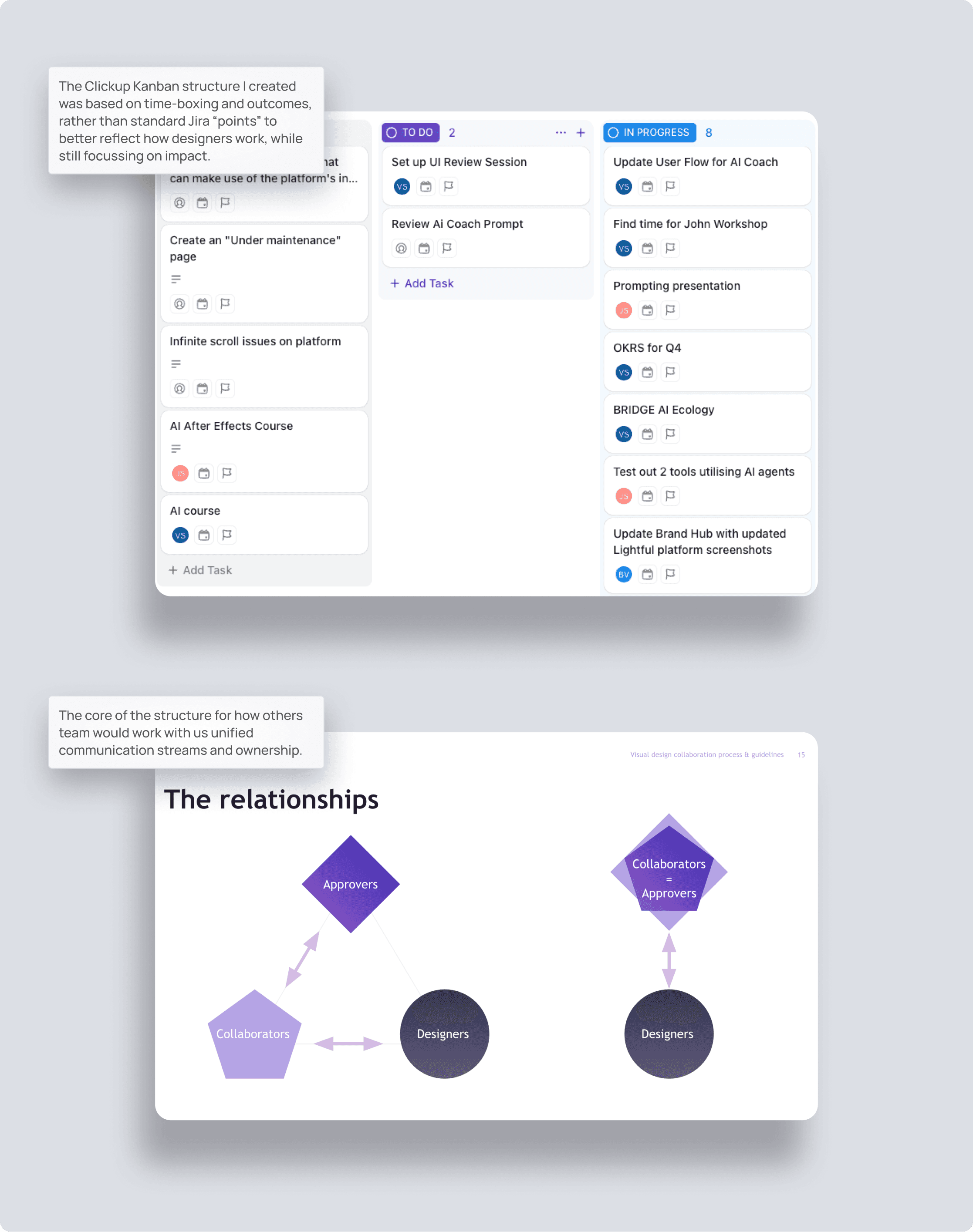
Working with designers can be a challenge - we like to explore, but other departments just want things done. I worked with product to create a ticketing system in Jira (and later Clickup) to allow other teams to assign us tasks. I implement a shared a "working with us" process I developed with my team. This outlined ideas around approvers, collaborators, and designers, which set the dynamic for cooperation and impactful designs.
▷ Alignment
Working with designers can be a challenge - we like to explore, but other departments just want things done. I worked with product to create a ticketing system in Jira (and later Clickup) to allow other teams to assign us tasks. I implement a shared a "working with us" process I developed with my team. This outlined ideas around approvers, collaborators, and designers, which set the dynamic for cooperation and impactful designs.
▷ Stakeholder Management:
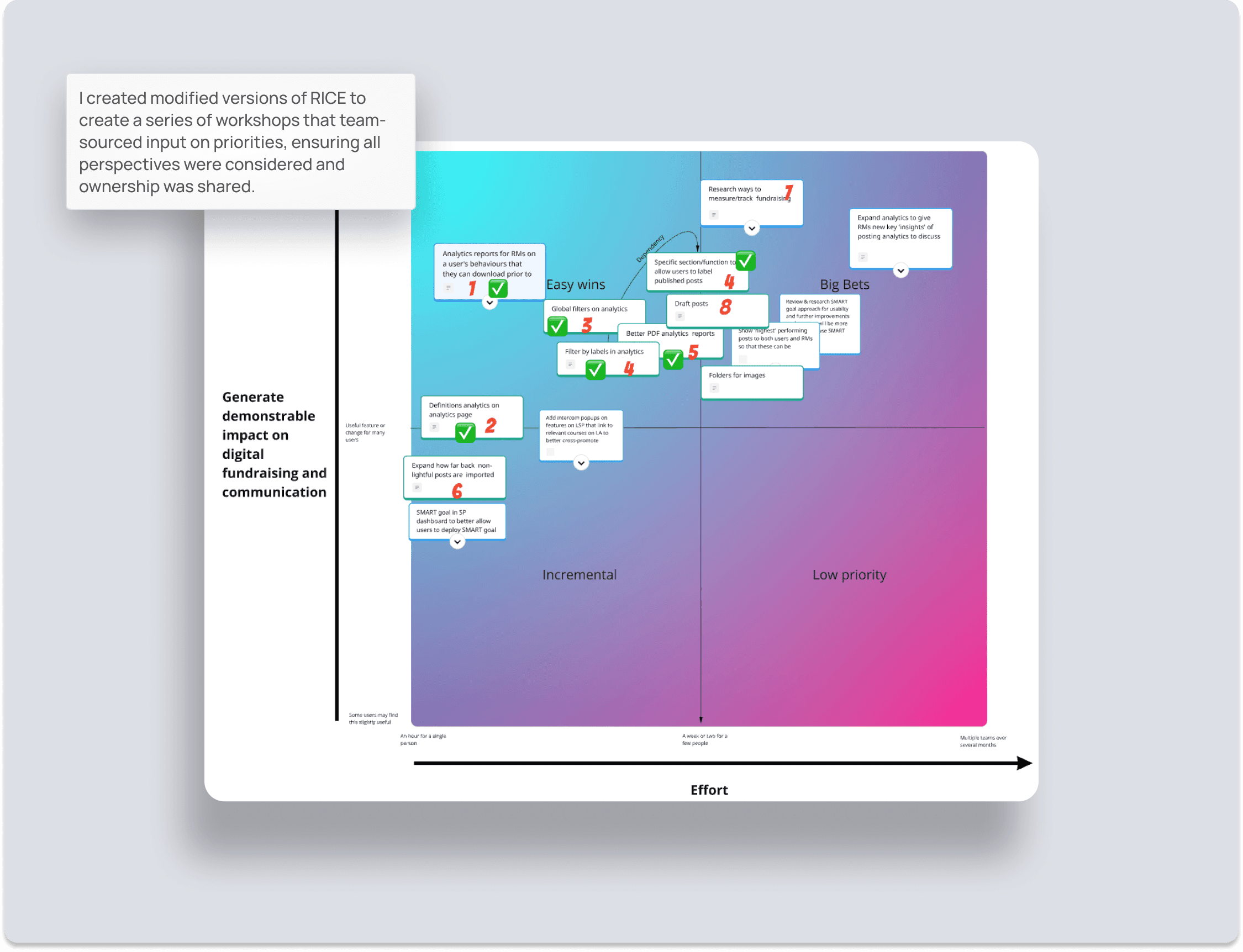
One of my key wins was aligning the C-Suite and the design/dev team. I facilitated Prioritisation Workshops using modified RICE frameworks (Miro Friendly), ensuring our design efforts were focused on features that provided the highest ROI for our non-profit users.
▷ Stakeholder Management:
One of my key wins was aligning the C-Suite and the design/dev team. I facilitated Prioritisation Workshops using modified RICE frameworks (Miro Friendly), ensuring our design efforts were focused on features that provided the highest ROI for our non-profit users.
▷ Improving the Workflow:
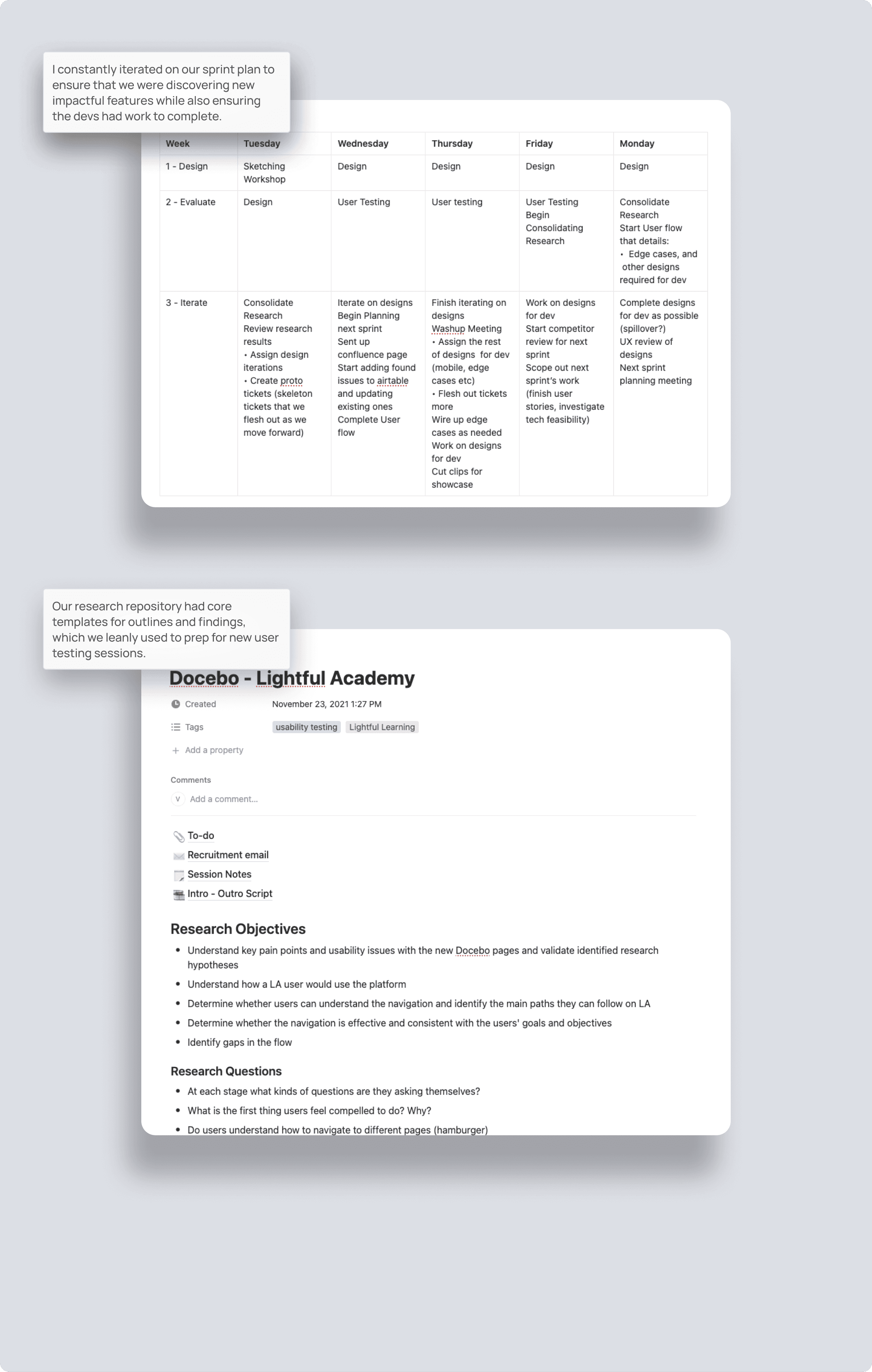
I implemented a "Dual-Track Agile" approach. While the engineering team was building current sprints, I led the design team in "Discovery Sprints." This ensured that by the time a feature (like the SMART Goal Tester) reached development, it had been de-risked through high-fidelity prototyping and usability testing. I also created a strategic research program so it informed the roadmap rather than just validating designs post-launch. As part of this, I created a hypothesis structure that allowed us to test propositions and easily validate it through user testing or other methods. It took a while for the team to wrap their head around using hypotheses, but I laid it out in several presentations.
▷ Improving the Workflow:
I implemented a "Dual-Track Agile" approach. While the engineering team was building current sprints, I led the design team in "Discovery Sprints." This ensured that by the time a feature (like the SMART Goal Tester) reached development, it had been de-risked through high-fidelity prototyping and usability testing. I also created a strategic research program so it informed the roadmap rather than just validating designs post-launch. As part of this, I created a hypothesis structure that allowed us to test propositions and easily validate it through user testing or other methods. It took a while for the team to wrap their head around using hypotheses, but I laid it out in several presentations.
▷ Design System Creation:
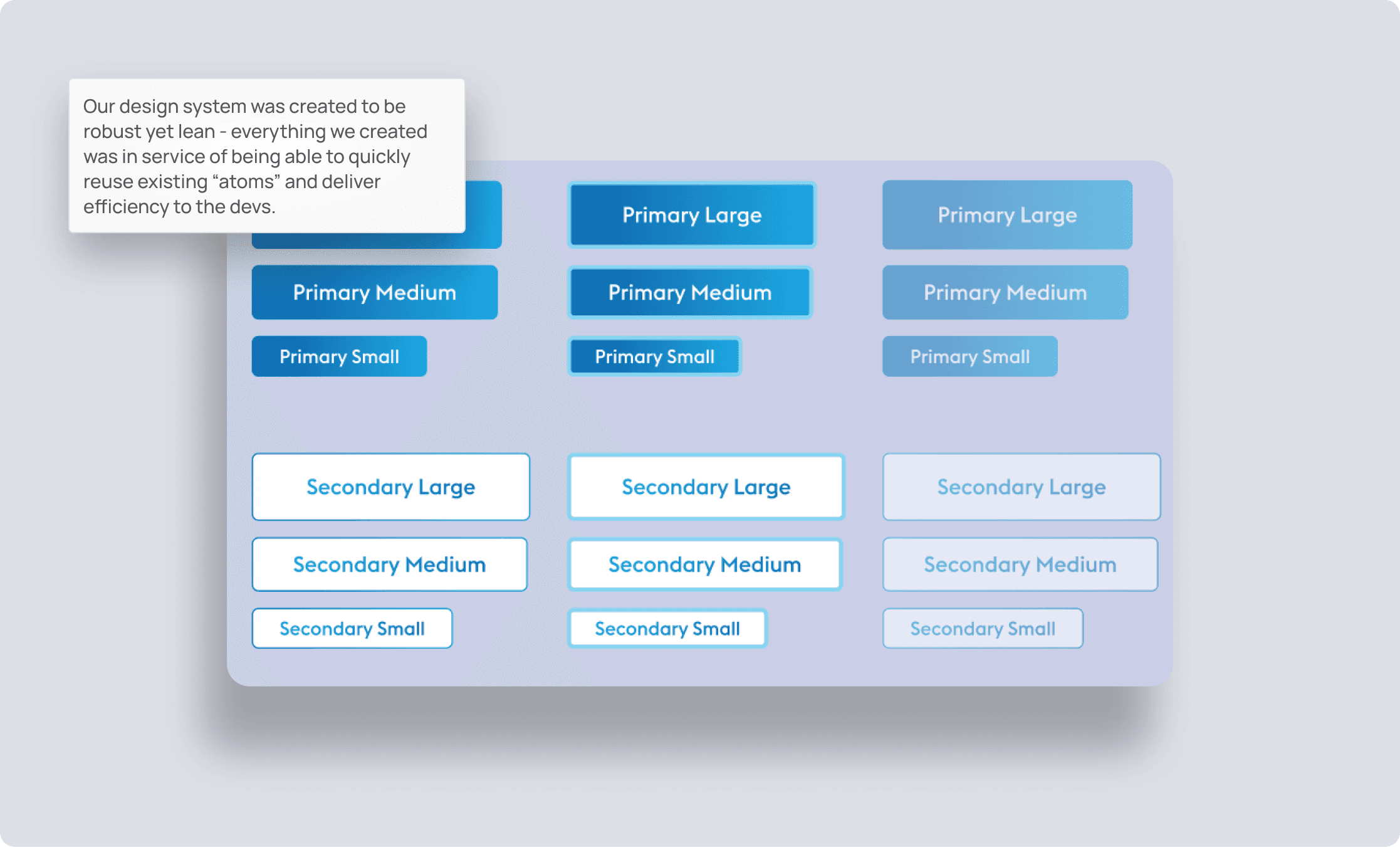
I spearheaded the creation of Ray, our unified Design System. By co-authoring the library with the engineering team, we moved away from 'handoffs' and toward a 'shared component' model that relied on atoms, which build into molecules, which built into organisms. We didn't always get this right - components were often broken away from the library, but quick communication between devs and designers kept these issues to a minimum.
▷ Design System Creation:
I spearheaded the creation of Ray, our unified Design System. By co-authoring the library with the engineering team, we moved away from 'handoffs' and toward a 'shared component' model that relied on atoms, which build into molecules, which built into organisms. We didn't always get this right - components were often broken away from the library, but quick communication between devs and designers kept these issues to a minimum.
▷ Mentorship & Quality:
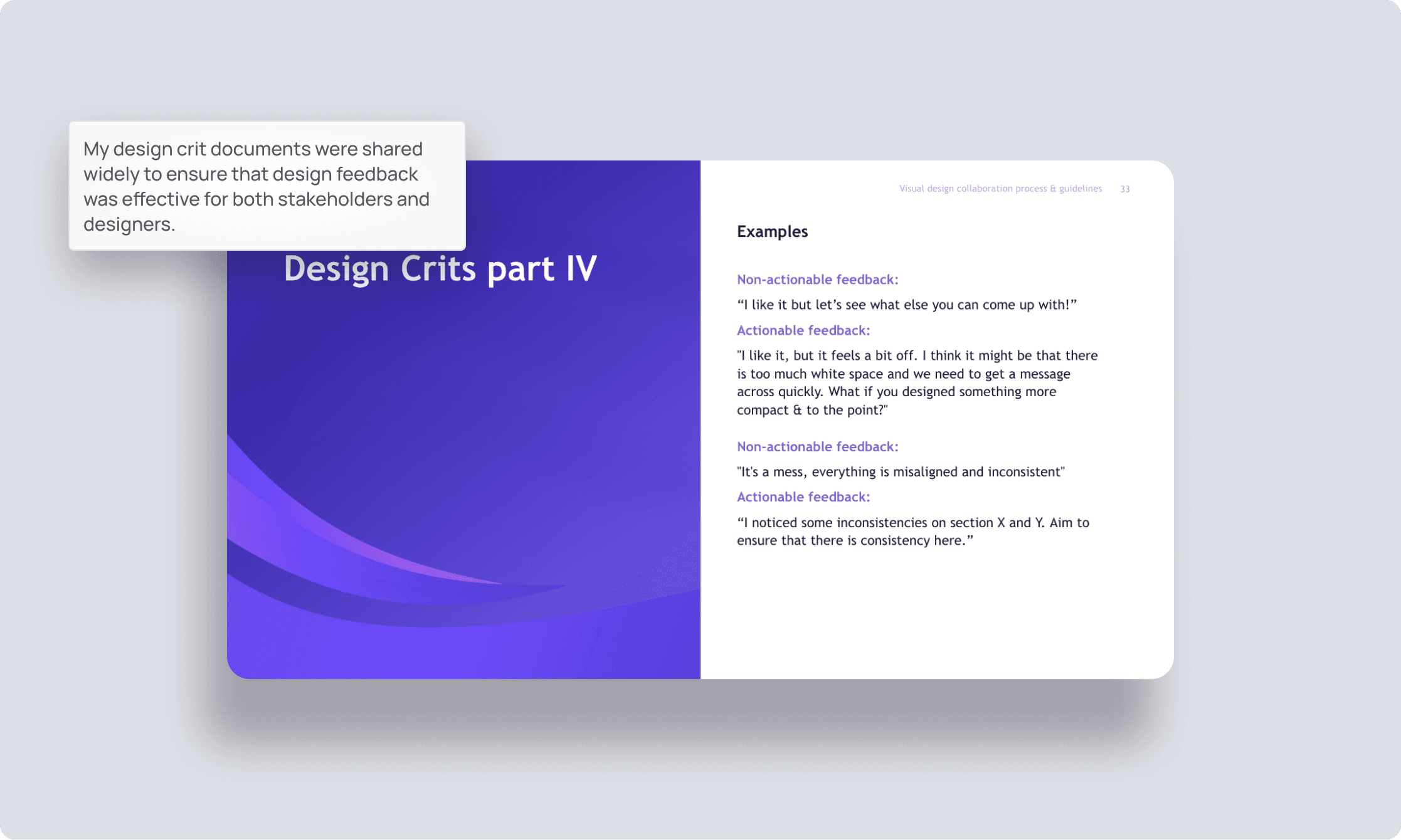
I established a Design Review Culture. By moving away from "approval" to "critique," I empowered my designers to own their work while ensuring every output met the high-quality bar expected of a lead-level organisation.
▷ Mentorship & Quality:
I established a Design Review Culture. By moving away from "approval" to "critique," I empowered my designers to own their work while ensuring every output met the high-quality bar expected of a lead-level organisation.