Client
Citizen's Advice
Role
Founding Designer
Direct Reports
4
Building mission critical, data-intensive flows
I had to improve legacy systems with significant techinical constraints in 3 months
I had to improve legacy systems with significant techinical constraints in 3 months
I had to improve legacy systems with significant techinical constraints in 3 months
Visit Site
▷ Overview
Led the redesign of CA's mobile and desktop app, built on Salesforce, that highlighted critical services to the public
Led team of 2 designers and 2 researchers over 3 months
I was responsible for the overall research and design, including UI, UX, and user research.
▷ Overview
Led the redesign of CA's mobile and desktop app, built on Salesforce, that highlighted critical services to the public
Led team of 2 designers and 2 researchers over 3 months
I was responsible for the overall research and design, including UI, UX, and user research.
▷ Outcome
90% of staff and volunteers using the platform, up from less than 30% previously.
Creation and layout of a design system in Salesforce.
80+ NPS score increase over the previous version.
▷ Outcome
90% of staff and volunteers using the platform, up from less than 30% previously.
Creation and layout of a design system in Salesforce.
80+ NPS score increase over the previous version.
▷ The Challenges
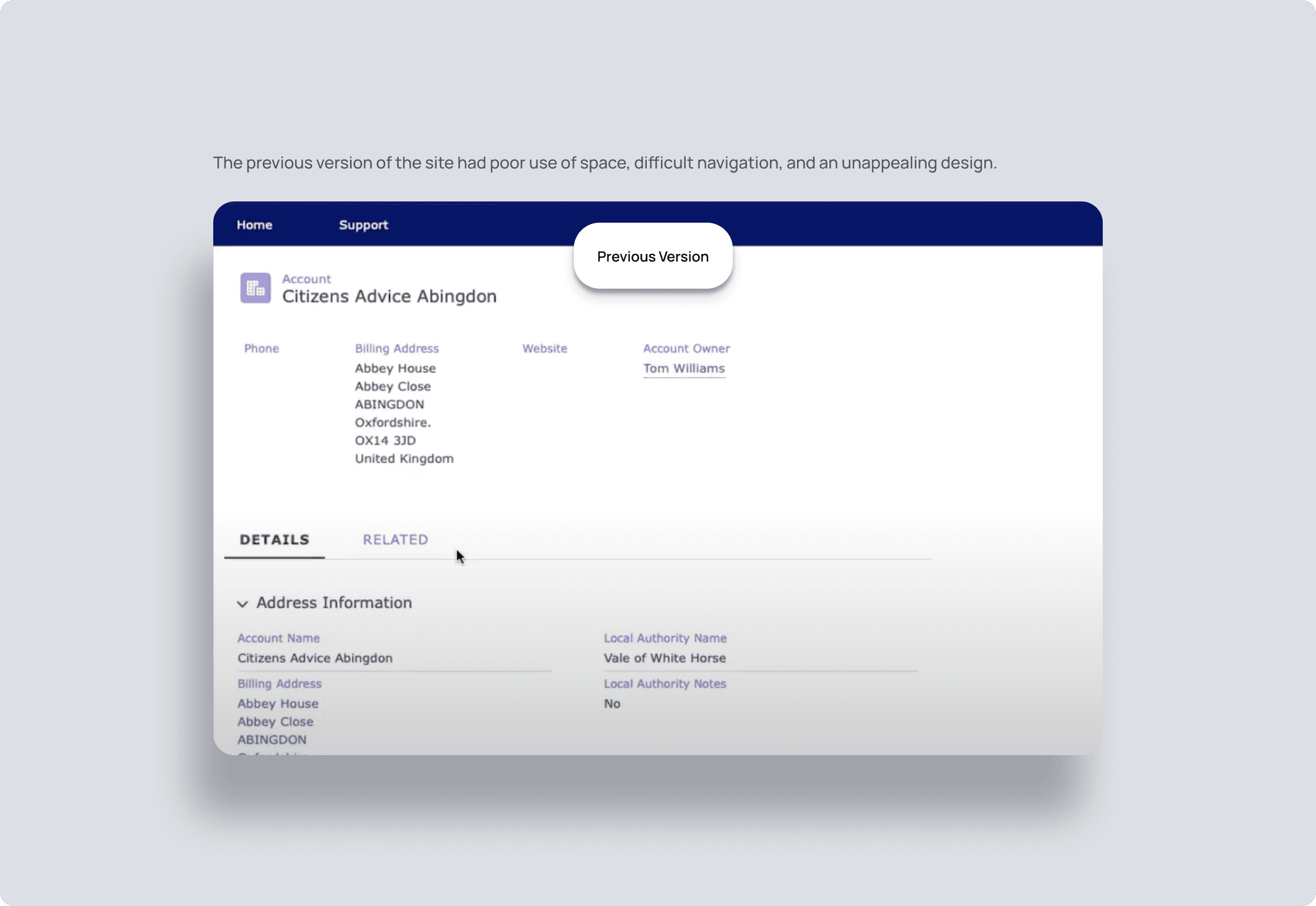
Citizens Advice is an organisation that delivers a range of critical services to the public through a network of 30,000 staff and volunteers. In our research, we found that the system that provided where and what these services were was rife with problems. For example, the tool lacked info on services in the area that weren’t provided by local authorities, and users couldn't search by location or service. Volunteers with very low digital capabilities had to use use this service, which, given the data, involved required somewhat complex interactions.
How could we transform a complex, broken search tool into an intuitive service for 30,000 volunteers on a mission-critical 12-week deadline?
▷ The Challenges
Citizens Advice is an organisation that delivers a range of critical services to the public through a network of 30,000 staff and volunteers. In our research, we found that the system that provided where and what these services were was rife with problems. For example, the tool lacked info on services in the area that weren’t provided by local authorities, and users couldn't search by location or service. Volunteers with very low digital capabilities had to use use this service, which, given the data, involved required somewhat complex interactions.
How could we transform a complex, broken search tool into an intuitive service for 30,000 volunteers on a mission-critical 12-week deadline?
The process
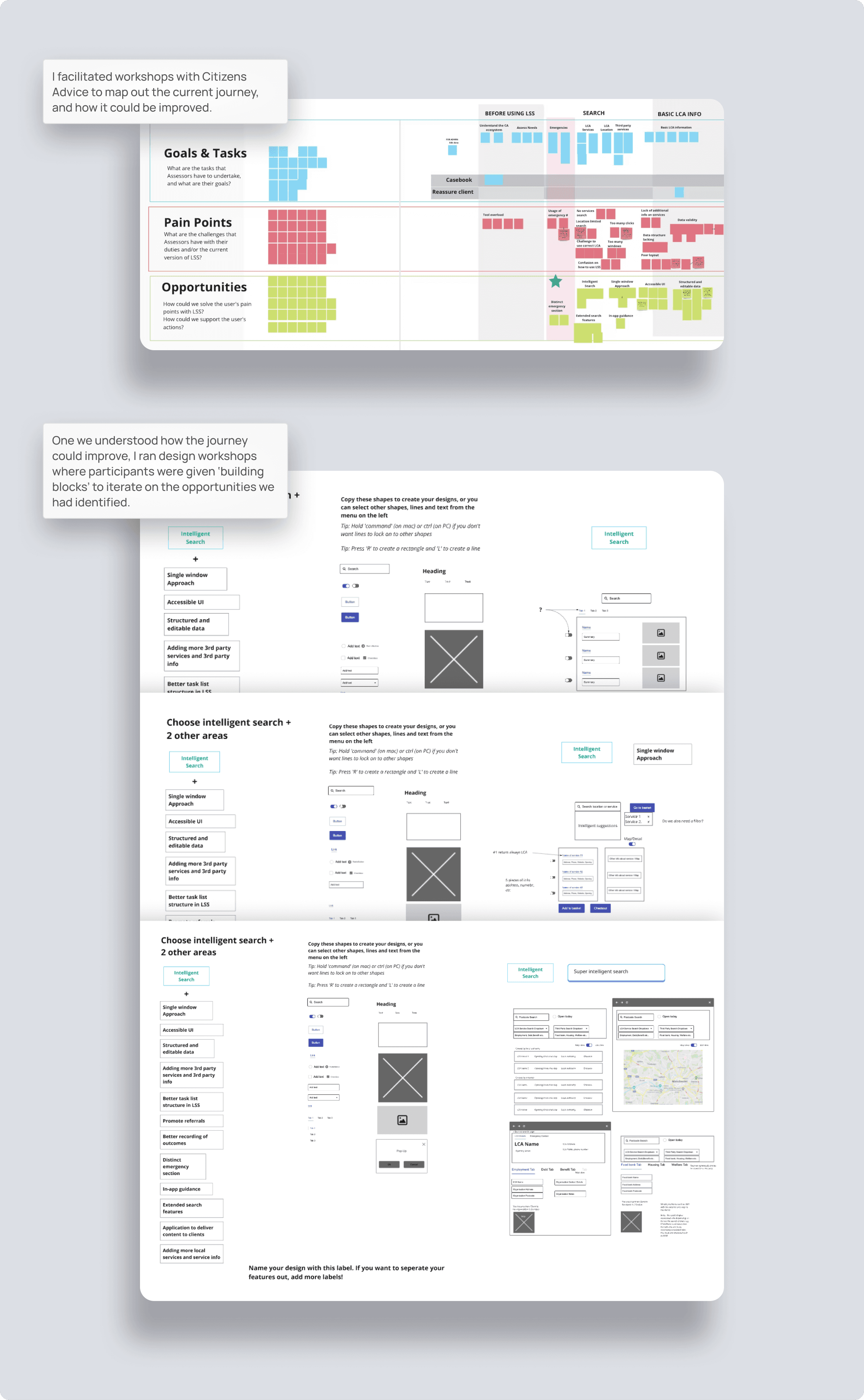
I set up a programme of workshops with key stakeholders at Citizen's Advice. The format was to understand pain current journey -> understand pain points -> identify opportunities -> ideate on opportunities. This fluid, yet impactful approach ensured we were finding opportunities based on real problems rather than just guessing. I ensured that anyone could participate in ideation through creating miro boards with wireframe building blocks. This collaboration gave us wide perspective and group ownership. We voted on the most impactful ideas that the team generated based on a RICE framework I created.
The process
I set up a programme of workshops with key stakeholders at Citizen's Advice. The format was to understand pain current journey -> understand pain points -> identify opportunities -> ideate on opportunities. This fluid, yet impactful approach ensured we were finding opportunities based on real problems rather than just guessing. I ensured that anyone could participate in ideation through creating miro boards with wireframe building blocks. This collaboration gave us wide perspective and group ownership. We voted on the most impactful ideas that the team generated based on a RICE framework I created.
▷ The Solution
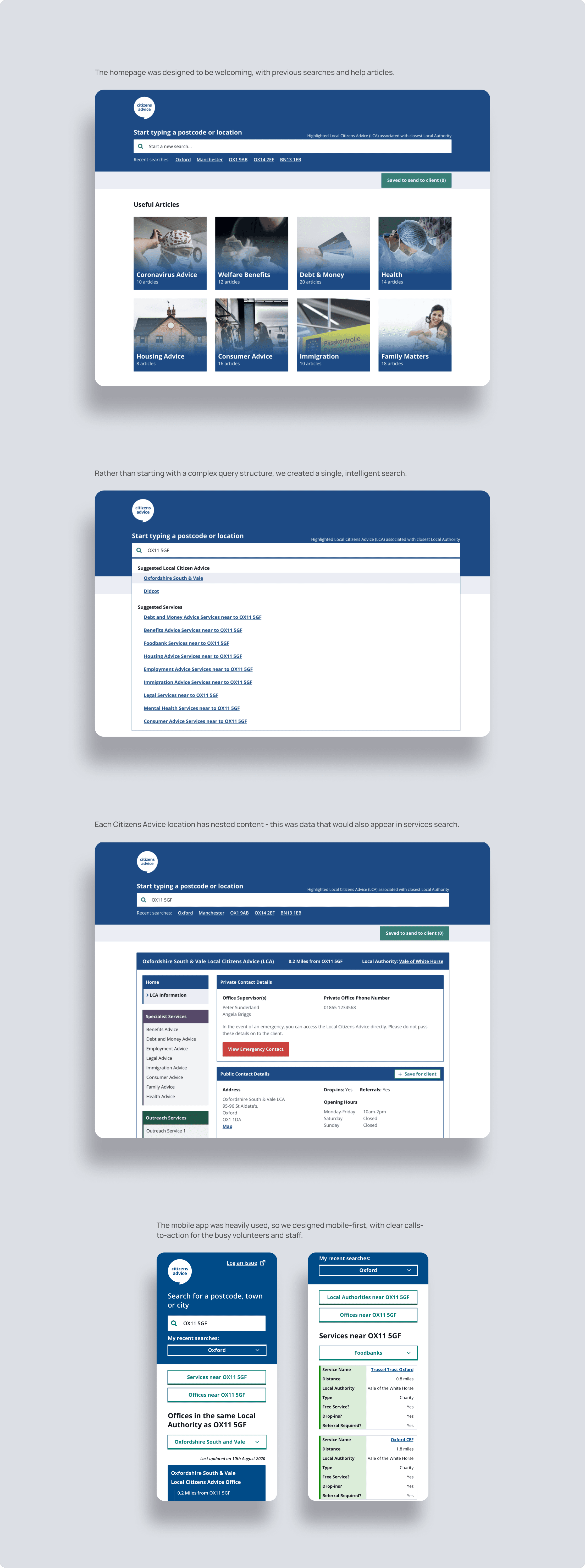
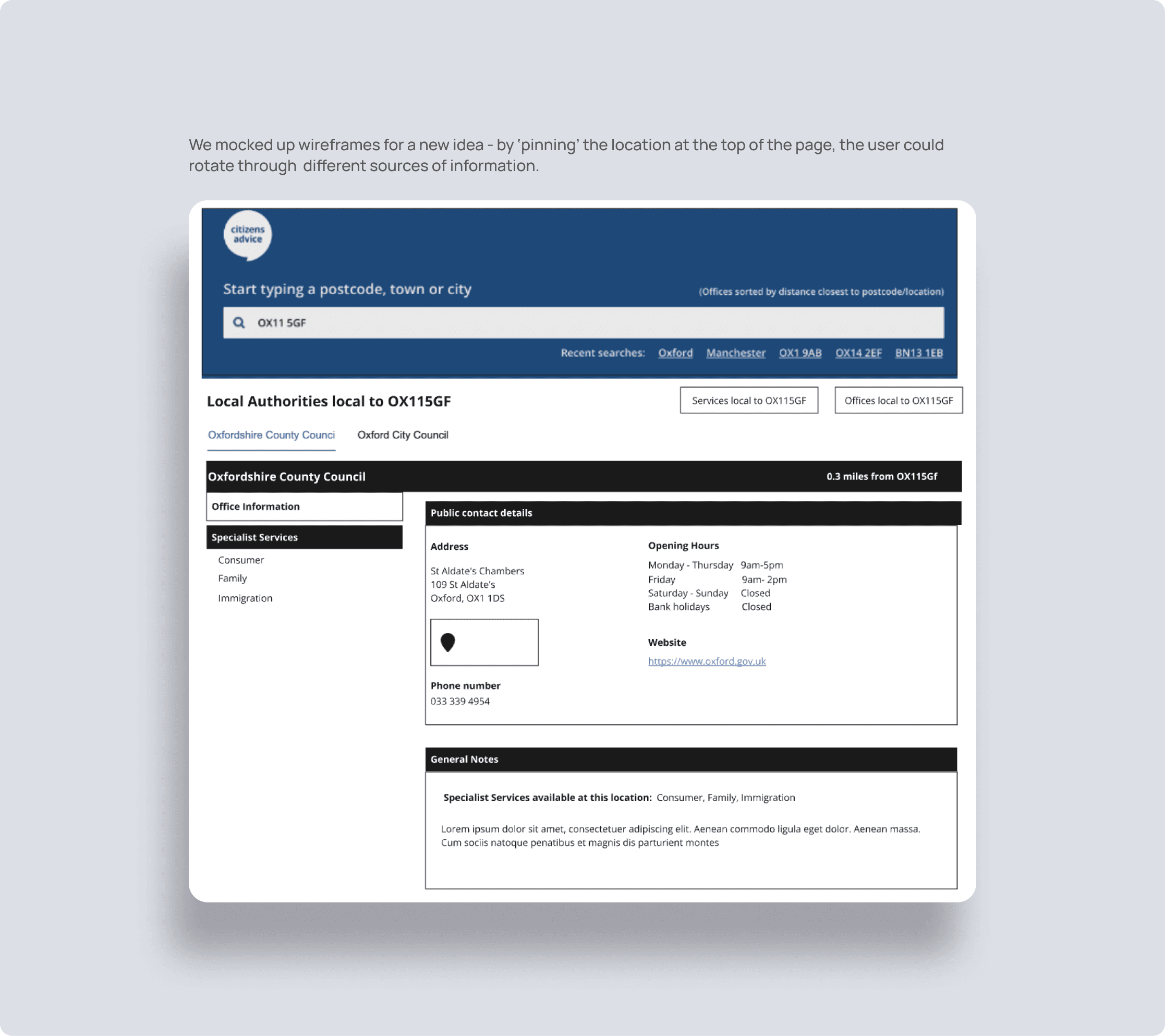
The primary solution we came up with in the workshops was a paradox: a more complex system, yet simpler for the user. It became clear that the best way to parcel out information was to divide it into three segments: that from local authorities, that from Citizens Advice, and that from third parties. By ‘pinning’ the location at the top of the page, the user could rotate through these different types of information. Subsequently, my team took these ideas and ran with them, iterating on the designs and building out a proper user flow and design system. Additionally, I mapped out how the system could intelligently identify what a user was typing in the search bar, as this was vital to determining the category of autosuggestions - was it a service or a location a user was type?
▷ The Solution
The primary solution we came up with in the workshops was a paradox: a more complex system, yet simpler for the user. It became clear that the best way to parcel out information was to divide it into three segments: that from local authorities, that from Citizens Advice, and that from third parties. By ‘pinning’ the location at the top of the page, the user could rotate through these different types of information. Subsequently, my team took these ideas and ran with them, iterating on the designs and building out a proper user flow and design system. Additionally, I mapped out how the system could intelligently identify what a user was typing in the search bar, as this was vital to determining the category of autosuggestions - was it a service or a location a user was type?
▷ The Outcome
As a team, we built this proposition out. I led on the direction and layout of a design system. Our team’s redesign resulted in a massive increase in the number of users, with 90% of staff and volunteers using it, up from less than 30% regularly accessing the older version. It also received an 80+ NPS score increase over the previous version.
▷ The Outcome
As a team, we built this proposition out. I led on the direction and layout of a design system. Our team’s redesign resulted in a massive increase in the number of users, with 90% of staff and volunteers using it, up from less than 30% regularly accessing the older version. It also received an 80+ NPS score increase over the previous version.