Client
Granti LTD
Role
Founding Designer
Direct Reports
1
Designing a multi-user granting scaleup
Overcoming unweildly enterprise granting software with elegant an webapp and mobile app
Overcoming unweildly enterprise granting software with elegant an webapp and mobile app
Overcoming unweildly enterprise granting software with elegant an webapp and mobile app
Visit Site
▷ Overview
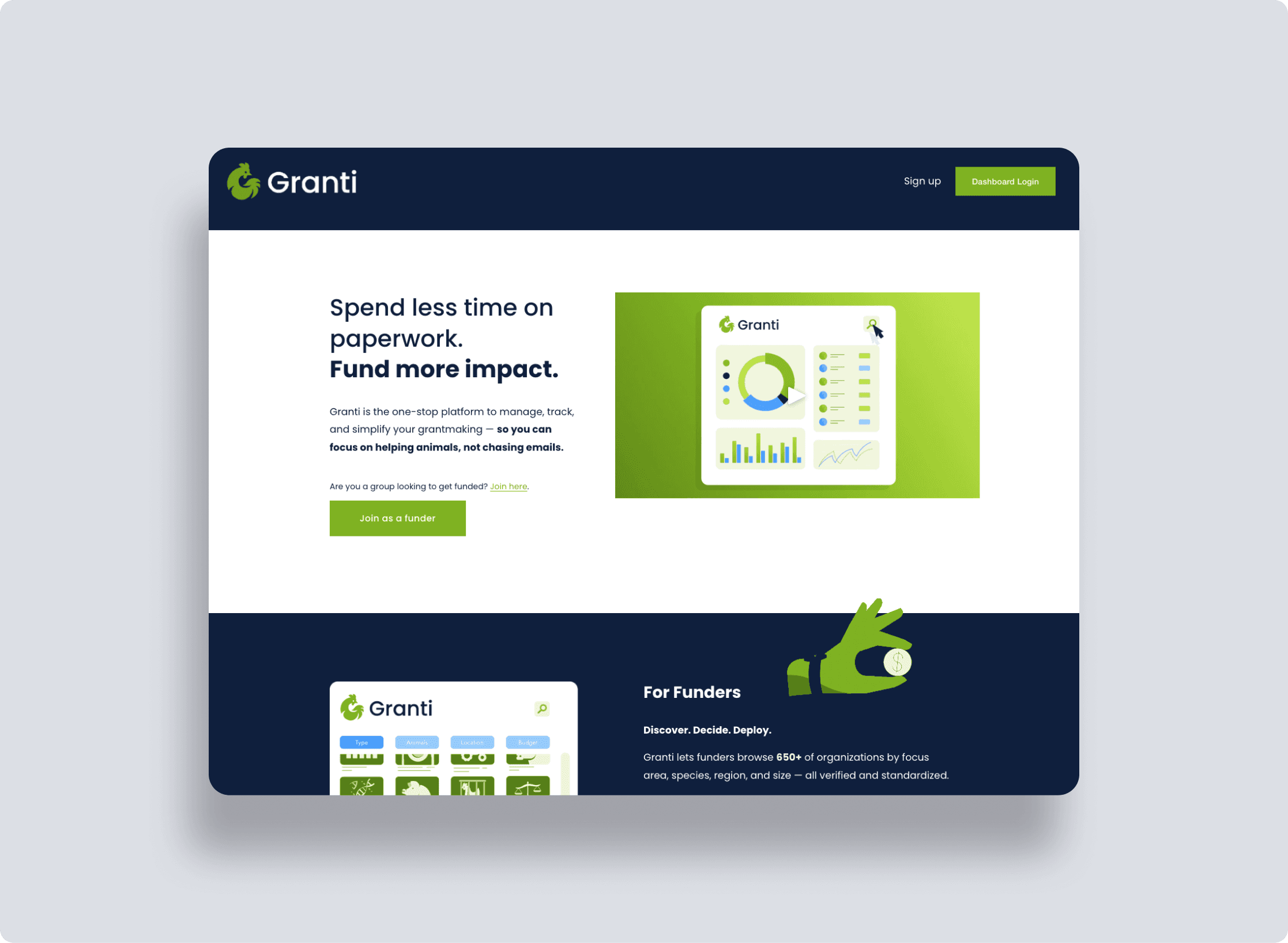
Founding designer for a two‑sided platform that streamlines grant‑making
Brings funders, grantees into a unified workspace
Highly regulated environment, with payment flows
I was responsible for the full design process from discovery to polished user interfaces.
▷ Overview
Founding designer for a two‑sided platform that streamlines grant‑making
Brings funders, grantees into a unified workspace
Highly regulated environment, with payment flows
I was responsible for the full design process from discovery to polished user interfaces.
▷ Outcome
Platform reduces administrative workload and improved satisfaction for both user types.
More than $25 million has been disbursed via the platform
700 grantees on the platform.
▷ Outcome
Platform reduces administrative workload and improved satisfaction for both user types.
More than $25 million has been disbursed via the platform
700 grantees on the platform.

▷ The Challenges
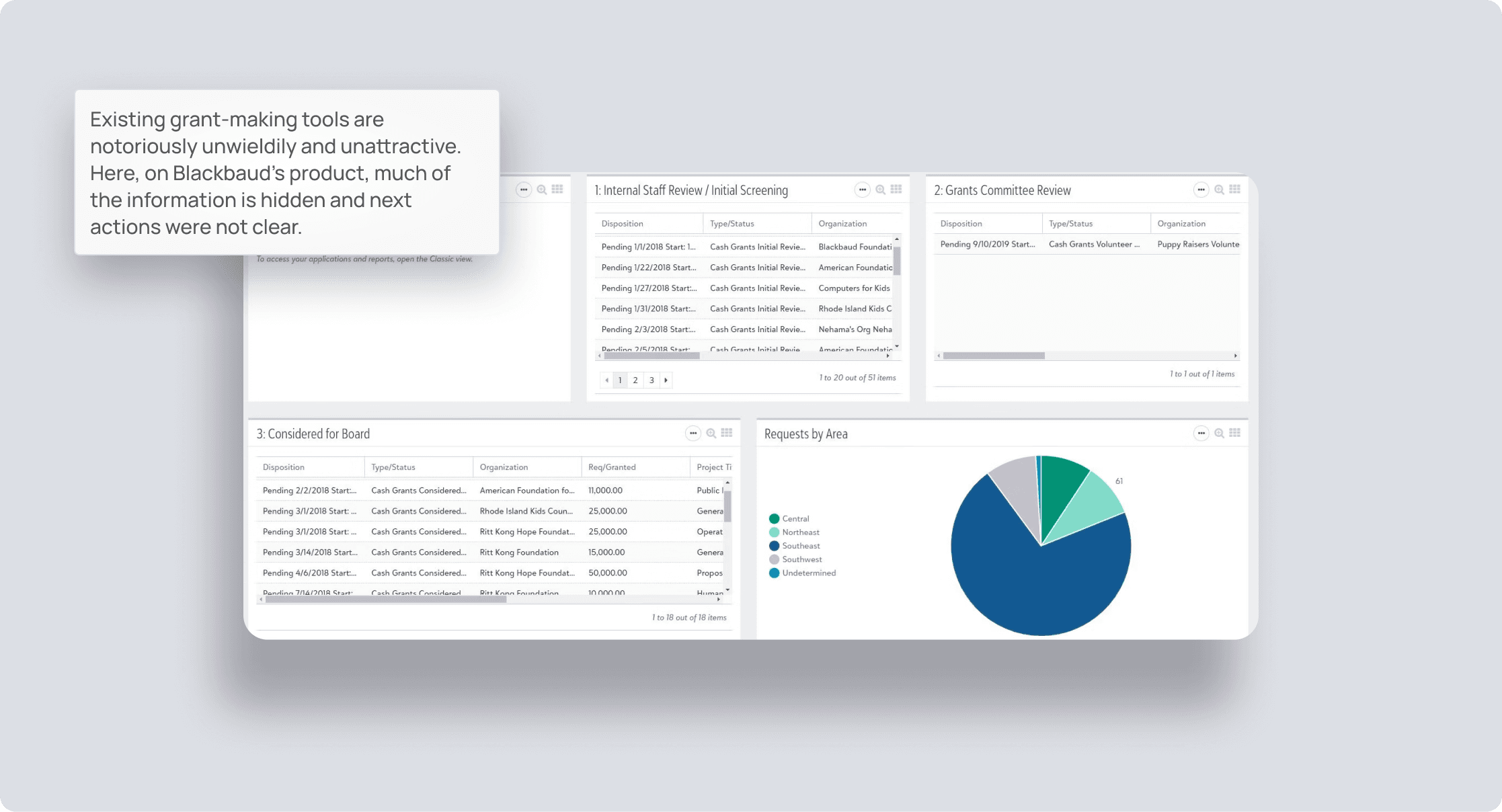
The grant-making software market is dominated by legacy enterprise behemoths. Granti was intended to take them on with simplified yet robust workflows. But to start, I had to figure out how the grant process worked? What were the pain points? I talked to many funders and applicants. Funders needed to track many applications, but the existing system offered limited insights and cumbersome navigation. Grantees felt unsure about their application status and felt frustrated by filling in the same forms again and again. Both roles had to work across disparate tools, making collaboration and transparency difficult.
How could we unify fragmented grant-making into a cohesive ecosystem that balances funder oversight with grantee transparency?
▷ The Challenges
The grant-making software market is dominated by legacy enterprise behemoths. Granti was intended to take them on with simplified yet robust workflows. But to start, I had to figure out how the grant process worked? What were the pain points? I talked to many funders and applicants. Funders needed to track many applications, but the existing system offered limited insights and cumbersome navigation. Grantees felt unsure about their application status and felt frustrated by filling in the same forms again and again. Both roles had to work across disparate tools, making collaboration and transparency difficult.
How could we unify fragmented grant-making into a cohesive ecosystem that balances funder oversight with grantee transparency?
▷ The Solution
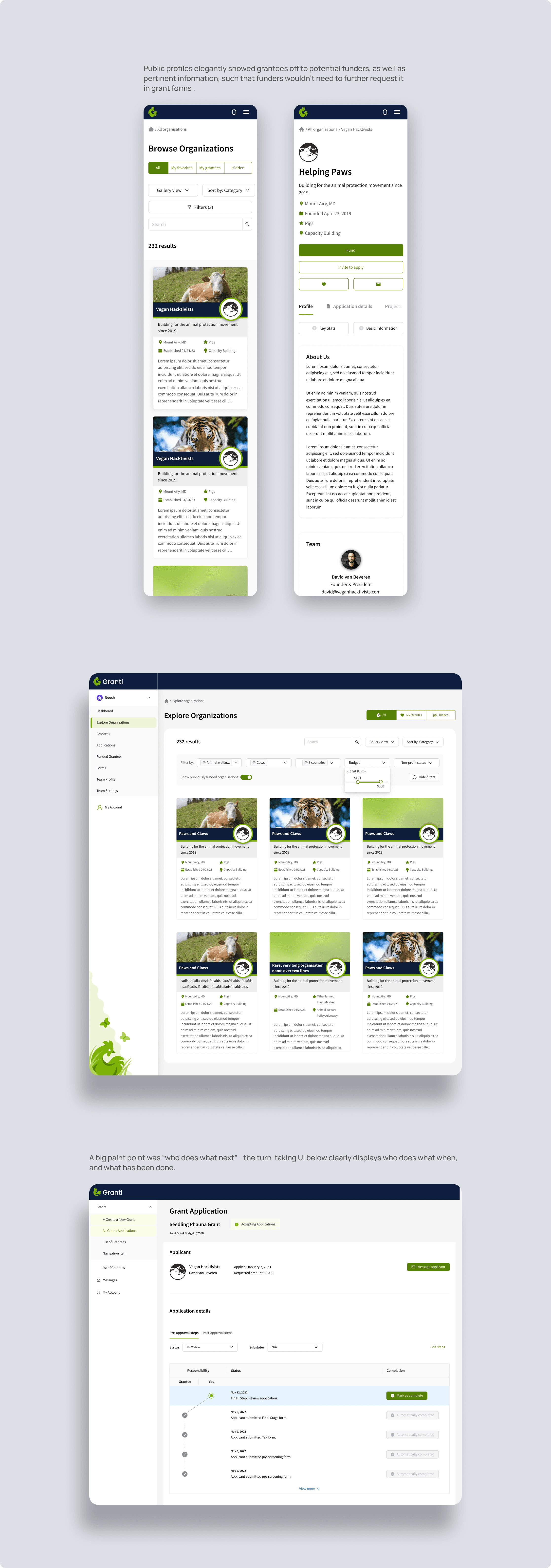
As a basis, I had to design two distinct experiences that felt cohesive: one for the grantee and one for the funder. But standardisation was difficult: some data funders wanted from applicants was generalisable across grants, while others were very specific. I found a compromise: public profiles with standardised information and individual grants that had customised forms. This allowed funders access high‑level data (finances etc) through public profiles but they could also request specific data through customised grant forms.
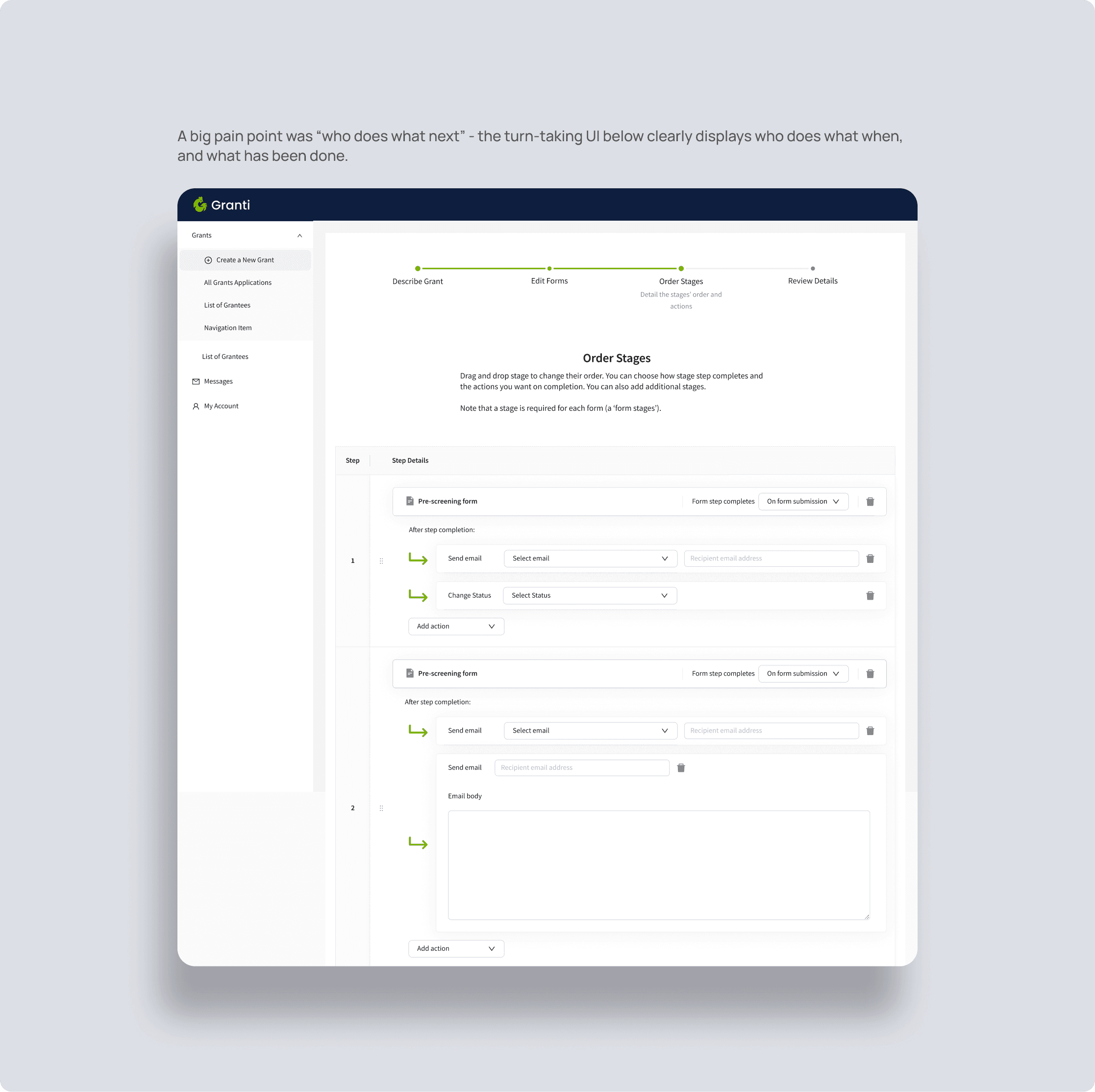
I also iterated on a simplified layout that clearly showed 'turn taking' in the application process, with a list of the applicant's submissions with clear status tags and next‑step prompts.
▷ The Solution
As a basis, I had to design two distinct experiences that felt cohesive: one for the grantee and one for the funder. But standardisation was difficult: some data funders wanted from applicants was generalisable across grants, while others were very specific. I found a compromise: public profiles with standardised information and individual grants that had customised forms. This allowed funders access high‑level data (finances etc) through public profiles but they could also request specific data through customised grant forms.
I also iterated on a simplified layout that clearly showed 'turn taking' in the application process, with a list of the applicant's submissions with clear status tags and next‑step prompts.
The UI
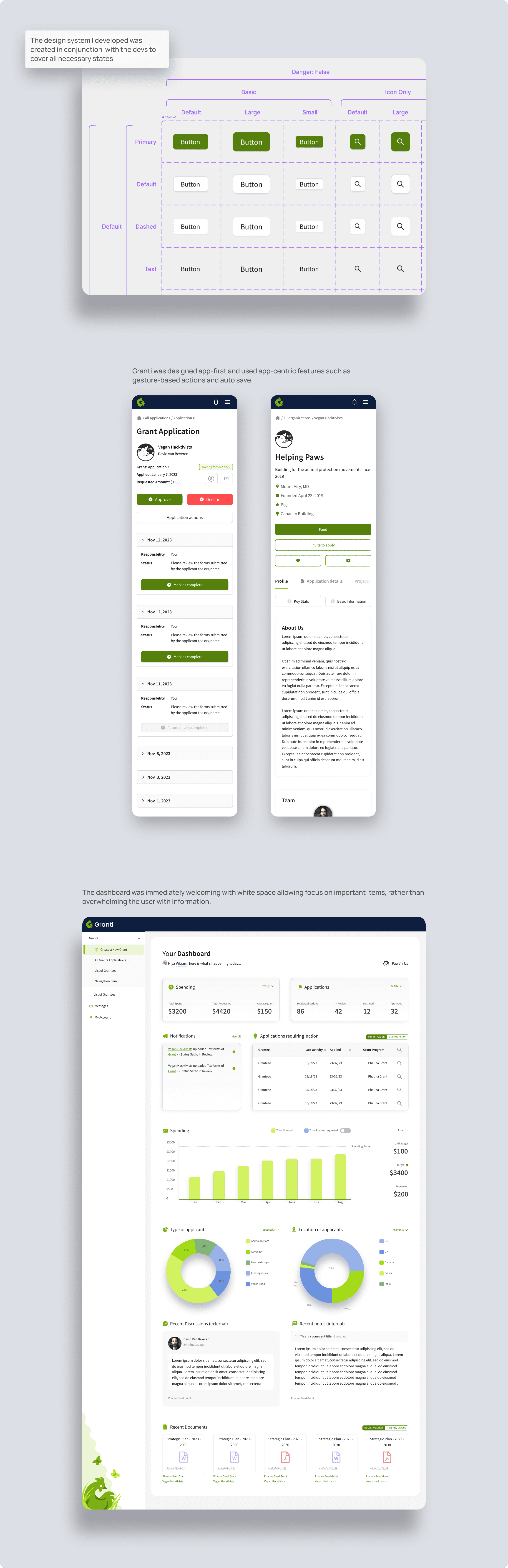
As this project was intended to scale over the years, a robust design system was needed that could be easily expanded upon. As such, we started with the ANT design system. However, it turned out to be somewhat limited, so I had to modify it. I did this in consultation with the devs, updating primitives and components to align with the existing design system. I designed the UI to be highly readable, with a brand that was clean and highly systematised, with certain colours (dark green) reserved for core calls-to-action.
The UI
As this project was intended to scale over the years, a robust design system was needed that could be easily expanded upon. As such, we started with the ANT design system. However, it turned out to be somewhat limited, so I had to modify it. I did this in consultation with the devs, updating primitives and components to align with the existing design system. I designed the UI to be highly readable, with a brand that was clean and highly systematised, with certain colours (dark green) reserved for core calls-to-action.
Complext flows
Sequencing steps that depending on various triggers and conditions was very difficult to make simple. It required a highly visual system that clearly indicated steps, sub steps, conditions and core triggers.
Complext flows
Sequencing steps that depending on various triggers and conditions was very difficult to make simple. It required a highly visual system that clearly indicated steps, sub steps, conditions and core triggers.
▷ The Outcome
The result is a platform that reduces administrative workload and improves satisfaction for both user types. Funders gain quick insight into budgets and application pipelines, enabling faster, data‑driven decision‑making. Currently more than $25 million has been disbursed via Granti, and there are over 700 grantees on the platform.
▷ The Outcome
The result is a platform that reduces administrative workload and improves satisfaction for both user types. Funders gain quick insight into budgets and application pipelines, enabling faster, data‑driven decision‑making. Currently more than $25 million has been disbursed via Granti, and there are over 700 grantees on the platform.